

The Book in 3 Sentences
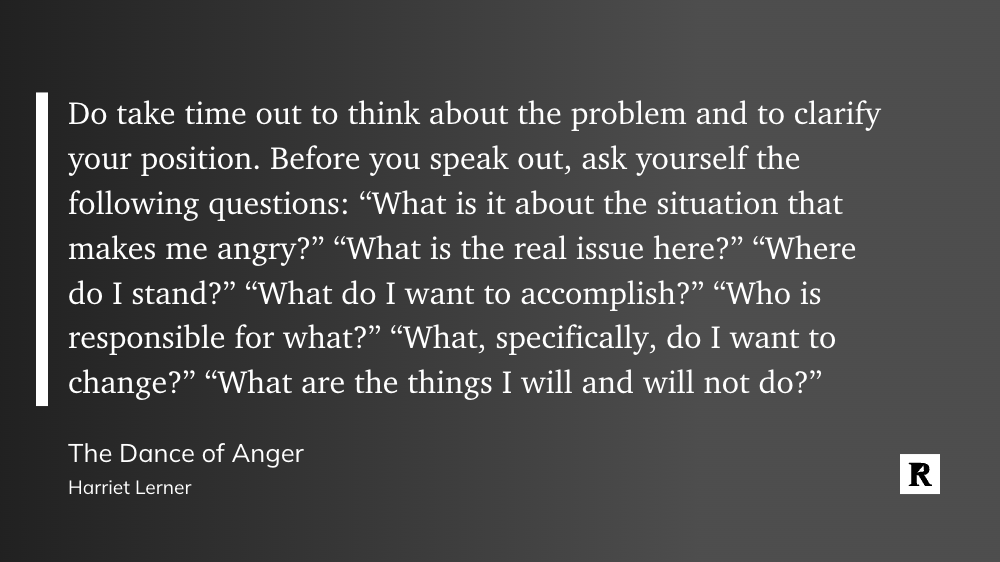
“The Dance of Anger” by Harriet Lerner is a self-help classic that explores the role of anger in women’s lives, specifically within intimate relationships with spouse, parents, siblings, etc., The author argues that women are often conditioned to suppress their anger, leading to lost identity (de-selfing) and recurring conflicts. At its core, the book is about empowering women to understand and express anger in the right way and help build healthier relationships with themselves and others.
Key Takeaways
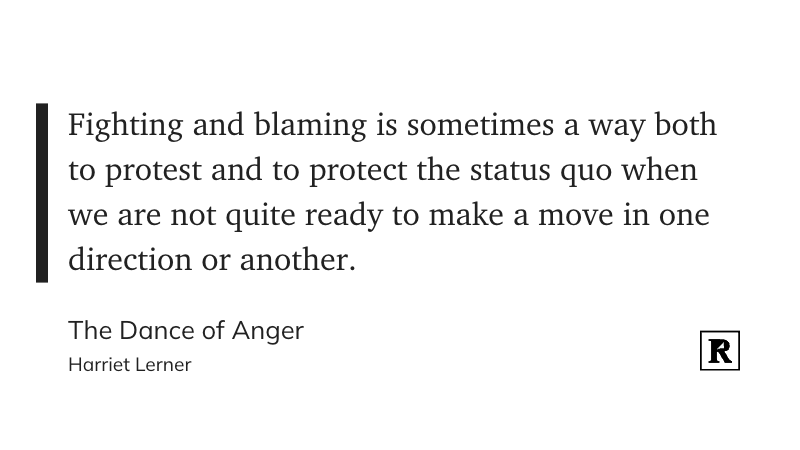
- What is the “Dance”? When people fall into predictable (and often) destructive patterns. Being able to recognize this pattern is MOST important to change it.
- Example: A wife criticizes her husband for being messy, he doesn’t care. She criticizes him more, going in circles.
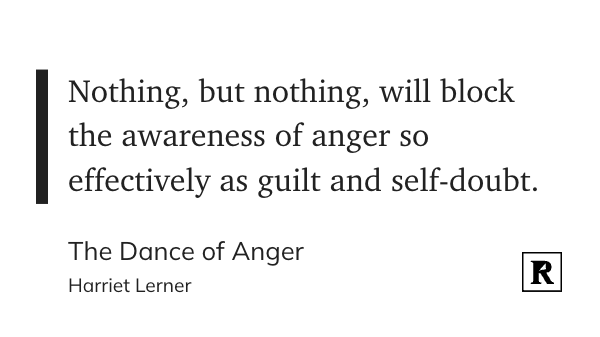
- De-selfing: when people suppress their own needs/desires to please others. This leads to built up unexpressed anger and resentment towards the other.
- Example: A woman who wants to attend a professional conference but doesn’t go because her husband doesn’t agree, prioritizing his needs over her own development.
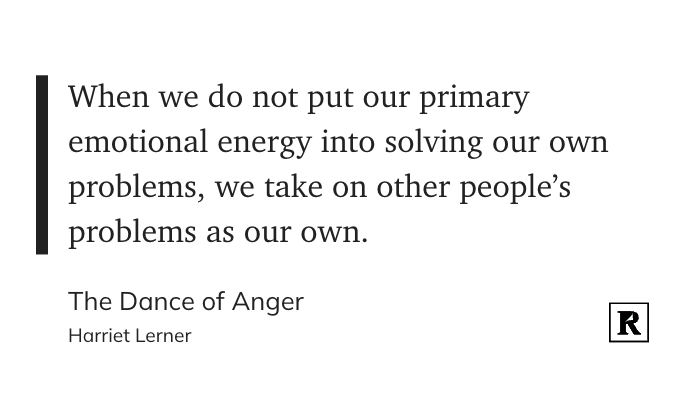
- Overfunctionining and underfunctioning: Where one person “overfunctions” (takes on too much responsibility) while the other “underfunctions” (avoids responsibility). If the people in this dynamic, recognize this and try to change – the other resists hard. So it takes time and persistence to break the cycle.
- Example: Firstborn children may be more prone to overfunctioning, while later-born children might underfunction.
- How to express anger?: without resorting to aggression or passive-aggression by setting clear boundaries and communicating needs effectively.
- Example: Instead of saying “You always leave the kitchen a mess!”, try “I feel frustrated when the kitchen is left untidy. Could we agree that whoever cooks also cleans up?”
How It Changed Me
My therapist recommended this book as we were processing anger—and rightly so. I learned from the book that anger guides us, just like hunger or thirst, to show that something is wrong or that boundaries have been crossed. I’ve started recognizing the “dance” of anger in my relationships and the overfunctioning and underfunctioning dynamics in different aspects of life.
As I’ve worked on expressing my anger slowly, I’ve noticed that people around me now struggle to adjust to this change, creating a need to find a new balance. Ultimately, I’ve learned that I am responsible for my anger, no one can “make” me angry. So instead of blaming others, I’ve decided to take responsibility/accountability for my reactive feelings. I now use “I feel…” language to take accountability for my emotions.
Who Should Read It
Ideal for: Women who feel stuck in the same type of fights, anyone who wants to have healthy relationships and those who enjoy powerful writing with relevant examples.
Skip if: You prefer a quick-fix approach with exercises or avoid introspecting about emotions (this requires self-reflection).
Final Thoughts
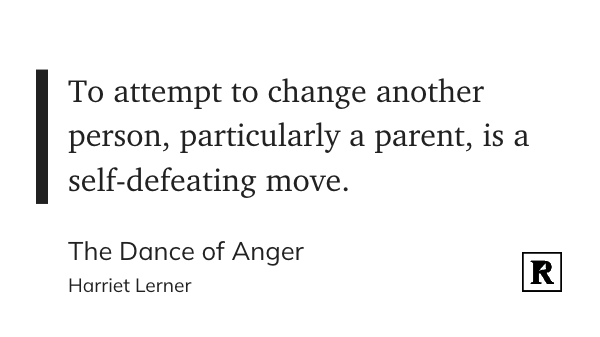
This was one of the most life-changing relationship advice books I read in the last few years (the previous one being Come As You Are). I am already on to the next books written by this author. If you’ve ever felt silenced, stuck, or not sure about how to express your anger, this book offers the tools and insights to help you break the cycle. It’s not just about anger, it’s about changing yourself.
Next, I’m considering reading Rage Becomes Her on this journey of exploring anger. If you’ve read either of these books, I’d love to hear your thoughts and insights!